

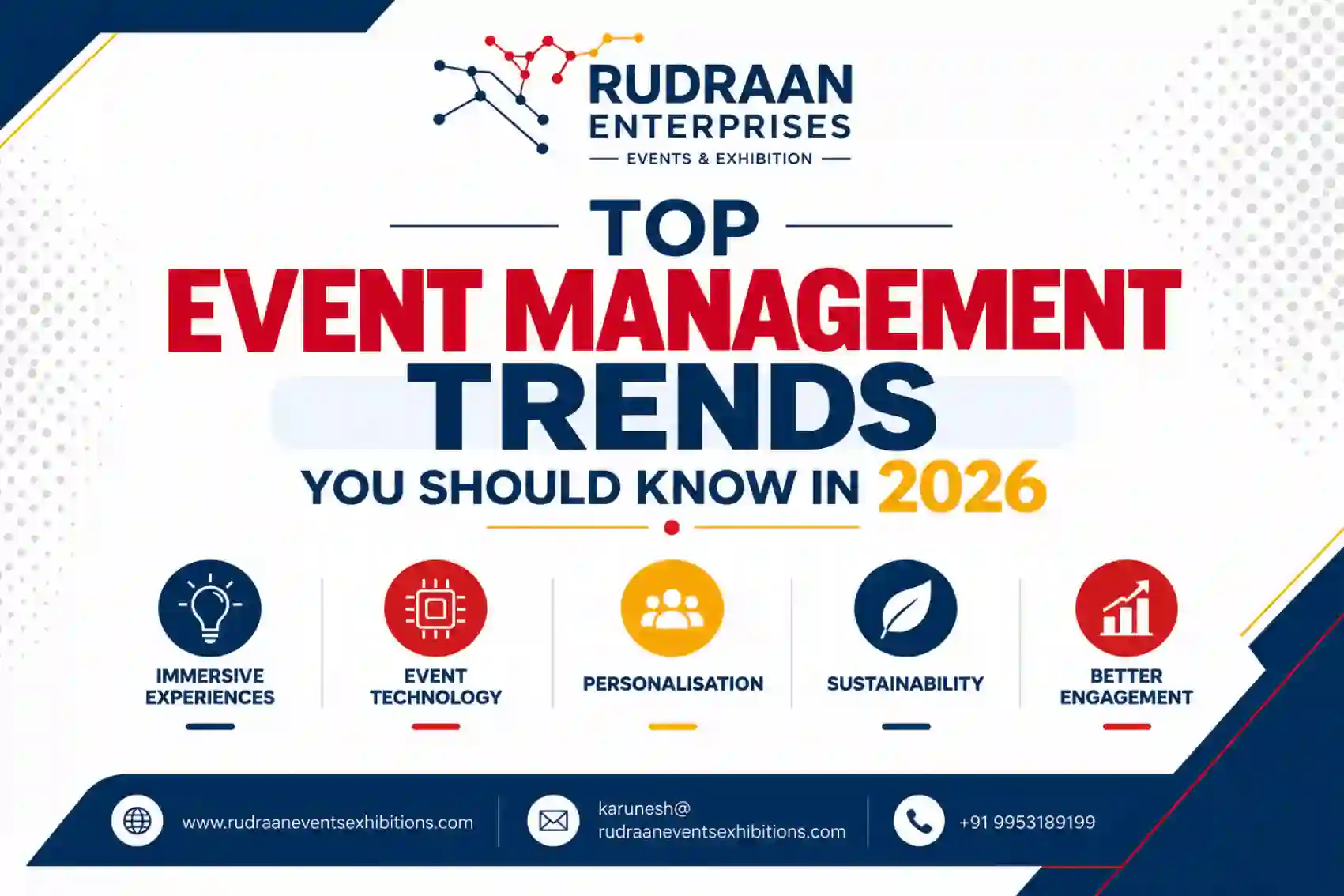
The event industry continues to evolve as businesses, brands, and audiences look for more meaningful and engaging experiences.
Events are no longer simply about bringing people together in one location. Today, successful events increasingly focus on experience, personalisation, technology, branding, engagement, and efficient execution.
For businesses planning corporate events, exhibitions, weddings, conferences, launches, or celebrations, understanding the latest event management trends in 2026 can help create experiences that feel relevant and memorable.
In this guide, we explore the key trends shaping modern event planning and explain how they can be used effectively.
Why Event Management Trends Matter
Understanding current event trends can help event planners and businesses make better decisions about:
- Event design
- Technology
- Guest experience
- Branding
- Entertainment
- Sustainability
- Event communication
- Audience engagement
- Venue selection
- Event execution
However, following a trend simply because it is popular isn’t always the right approach.
The best event strategy is one where new ideas support the purpose, audience, and objectives of the event.
1. Experience-Focused Event Design
One of the biggest shifts in modern event management is the growing focus on the overall guest experience.
Instead of designing an event around individual elements such as décor or entertainment, planners increasingly look at the complete guest journey.
This can include:
Arrival → Welcome → Interaction → Main Experience → Networking → Entertainment → Departure
Every stage can contribute to how guests remember the event.
Why Experience Matters
A well-designed experience can help guests feel more involved rather than simply being spectators.
For corporate events, this may mean interactive sessions, networking opportunities, personalised communication, and engaging presentations.
For weddings and celebrations, it can mean memorable entrances, immersive décor, entertainment, and personalised guest experiences.
2. Personalized Event Experiences
Audiences increasingly expect events to feel relevant to them.
Personalisation can be introduced through:
- Personalized invitations
- Guest communication
- Customised experiences
- Interactive activities
- Personalized event content
- Audience-specific sessions
- Tailored hospitality
For corporate events, businesses can also create experiences based on different guest groups, such as employees, clients, partners, or VIP guests.
The goal is to make people feel that the event has been designed with them in mind.
3. Immersive Event Experiences
Immersive experiences can make guests feel more connected to an event.
Instead of simply watching a presentation or performance, visitors can interact with the environment.
Examples include:
- Interactive installations
- Themed environments
- Digital experiences
- Interactive displays
- Immersive lighting
- Projection-based experiences
- Brand experience zones
Immersive design can be particularly effective for exhibitions, product launches, brand activations, and large corporate events.
4. Smarter Use of Event Technology
Technology continues to influence how events are planned and experienced.
Depending on the event, technology can support:
- Registration
- Guest communication
- Presentations
- Audience interaction
- Lead capture
- Digital displays
- Event networking
- Feedback collection
The important point is that technology should solve a problem or improve the experience.
Adding technology simply because it is available may increase complexity without adding real value.
5. Interactive Audience Engagement
Passive audiences are becoming less desirable for many event formats.
Event organizers are increasingly looking for ways to encourage participation.
Interactive options can include:
- Live polls
- Q&A sessions
- Audience quizzes
- Interactive screens
- Games
- Team activities
- Live voting
- Social media participation
Interactive experiences can help maintain attention and create more memorable moments.
6. AI-Assisted Event Planning
Artificial intelligence is becoming increasingly relevant to event planning workflows.
Depending on the tools being used, AI can support tasks such as:
- Brainstorming event concepts
- Drafting event communication
- Creating content ideas
- Analysing feedback
- Supporting audience segmentation
- Organising information
- Assisting with planning workflows
However, AI should support event professionals rather than replace human judgement.
Event planning still requires creativity, communication, negotiation, vendor coordination, and on-ground decision-making.
7. Data-Driven Event Decisions
Event planning can increasingly use data to understand what works and what doesn’t.
Businesses can review information such as:
- Attendance
- Registration numbers
- Session participation
- Engagement
- Lead generation
- Feedback
- Guest preferences
This information can help improve future events.
For example, if one session consistently receives higher engagement than another, planners can use that insight when developing future programmes.
8. Sustainable Event Planning
Sustainability is becoming an important consideration when planning events.
Event organizers can reduce unnecessary waste by considering:
- Reusable décor
- Digital invitations
- Responsible material selection
- Waste management
- Energy-efficient lighting
- Reusable signage
- Local sourcing
- Responsible catering practices
Sustainable planning does not mean sacrificing creativity.
With thoughtful design, sustainability can become part of the event concept itself.
9. Flexible and Hybrid Event Formats
Some events may benefit from combining physical and digital participation.
Hybrid formats can allow people who cannot attend physically to participate remotely.
Depending on the event, this may include:
- Live streaming
- Virtual presentations
- Online networking
- Digital audience participation
- Recorded sessions
However, hybrid events require careful technical planning.
The online audience should receive an experience that is intentionally designed rather than simply watching a camera feed of the physical event.
10. More Engaging Exhibition Experiences
Exhibitions are increasingly becoming experience-driven environments.
Brands are looking beyond traditional product displays and creating spaces where visitors can:
- Interact with products
- Watch demonstrations
- Explore digital content
- Participate in activities
- Speak with representatives
- Experience the brand
For exhibition stall design, this means considering visitor flow, engagement, branding, lighting, technology, and functionality together.
This connects directly with the exhibition stall design topics covered in Day 2 of our content calendar.
11. Stronger Event Branding
Events are increasingly being treated as extensions of the brand.
Branding can be integrated across:
- Entrance areas
- Stage design
- Digital screens
- Signage
- Registration counters
- Event materials
- Photo opportunities
- Exhibition spaces
Strong event branding creates a consistent visual identity throughout the guest journey.
The key is to maintain a balance between visibility and design quality.
12. More Purposeful Event Entertainment
Entertainment remains an important part of many events, but the selection is becoming more strategic.
Instead of choosing entertainment simply because it is popular, planners should consider:
- Audience
- Event objective
- Venue
- Timing
- Budget
- Event theme
Options may include:
- Live music
- DJs
- Dance performances
- Cultural performances
- Stand-up comedy
- Interactive entertainment
- Celebrity appearances
The entertainment should support the overall event experience.
13. Smaller, More Meaningful Networking Experiences
Large networking sessions can sometimes feel overwhelming.
Event planners can create more comfortable networking environments through:
- Networking lounges
- Small-group discussions
- Curated meetings
- Comfortable seating
- Interactive networking activities
This can be particularly useful for corporate conferences, business events, exhibitions, and professional gatherings.
14. Premium Event Décor With Purpose
Modern event décor is increasingly focused on creating an atmosphere rather than simply filling a space.
Design elements can include:
- Architectural lighting
- Custom stage designs
- Floral installations
- Creative entrance structures
- Branded environments
- Premium furniture
- Layered lighting
The best décor should support the event theme, brand, audience, and purpose.
15. Social Media-Friendly Event Spaces
Events are increasingly designed with shareable moments in mind.
Businesses can create dedicated areas for guests to capture and share content.
Examples include:
- Branded photo walls
- Creative installations
- LED backdrops
- Themed photo areas
- Interactive displays
- Event hashtags
However, these elements should feel naturally integrated into the event rather than looking like an afterthought.
16. Better Event Safety and Risk Planning
Event safety remains a fundamental part of professional event management.
Planning should consider:
- Crowd movement
- Emergency access
- Electrical safety
- Stage safety
- Equipment installation
- Guest capacity
- Vendor coordination
- Emergency procedures
A visually impressive event still needs to be safe and professionally managed.
17. Seamless Guest Registration
The guest experience begins before the main event.
A complicated registration process can create unnecessary delays.
Event organizers can improve the process through:
- Online registration
- QR-based check-in
- Digital invitations
- Pre-event communication
- Clearly organized registration counters
The exact solution should depend on the event size and audience.
18. More Flexible Event Spaces
Modern venues are increasingly expected to support different event formats.
A flexible space can accommodate:
- Conferences
- Networking
- Dining
- Presentations
- Entertainment
- Exhibitions
Event planners can use movable furniture, modular structures, lighting, and temporary installations to adapt spaces throughout the event.
19. Focus on Measurable Event Outcomes
Businesses increasingly want to understand whether an event achieved its purpose.
Depending on the event objective, useful measurements may include:
- Attendance
- Engagement
- Leads
- Networking meetings
- Audience feedback
- Brand visibility
- Employee participation
- Client responses
The right metrics should be decided before the event rather than after it.
20. Professional Event Management Partnerships
As events become more complex, businesses may benefit from working with experienced event professionals.
A professional event management partner can help coordinate:
- Planning
- Venue management
- Creative design
- Branding
- Production
- Entertainment
- Vendors
- Guest management
- Event-day execution
This can allow the internal business team to focus on its core responsibilities while the event team manages the operational details.
Which Event Trends Should You Use?
Not every trend is suitable for every event.
Before adopting a new idea, ask:
Does it support the event objective?
A corporate conference may need engagement tools, while a wedding may prioritise personalised experiences.
Does it suit the audience?
The experience should be appropriate for the people attending.
Does it fit the budget?
A trend is only useful if it can be implemented effectively within the available budget.
Does the venue support it?
Technology, production, lighting, entertainment, and installations may have specific venue requirements.
Does it improve the guest experience?
If an element does not add meaningful value, it may not be necessary.
Common Mistakes When Following Event Trends
Following Every Trend
Trying to include too many trends can make an event feel inconsistent.
Ignoring the Event Objective
Creative ideas should support the purpose of the event.
Prioritising Appearance Over Function
A visually impressive event still needs good planning and execution.
Underestimating Technology Requirements
Technology requires proper testing, technical support, and contingency planning.
Forgetting the Audience
The most popular event trend isn’t necessarily the most suitable one for your guests.
How Rudraan Events & Exhibitions Approaches Modern Events
Rudraan Events & Exhibitions works across Corporate Events, Exhibitions, Weddings, and Entertainment, allowing event requirements to be approached from both creative and execution perspectives.
Modern event planning is not simply about adding the latest trend.
It is about understanding the event objective, audience, venue, brand, and experience before deciding which ideas will actually add value.
Whether the requirement involves corporate event planning, exhibition design, wedding experiences, or entertainment, every element should work together as part of one organized event strategy.
Event Trends Checklist for 2026
Before finalising your event strategy, consider:
- Event objective clearly defined
- Audience understood
- Guest journey planned
- Personalisation opportunities identified
- Technology requirements evaluated
- Interactive elements considered
- Sustainability options reviewed
- Branding strategy prepared
- Entertainment selected
- Venue capabilities confirmed
- Safety requirements reviewed
- Event metrics defined
- Backup plans prepared
- Professional event support arranged
Final Thoughts
The biggest event management trends in 2026 are centred around creating better experiences rather than simply creating bigger events.
Personalisation, immersive experiences, technology, audience engagement, sustainability, stronger branding, interactive entertainment, and measurable outcomes are all influencing the way modern events are planned.
But trends should never replace strategy.
The most successful events are those where every element—from the venue and décor to technology and entertainment—supports the event’s purpose and creates a meaningful experience for the audience.
Plan Your Next Event With Rudraan Events & Exhibitions
Planning a corporate event, exhibition, wedding, or entertainment event in 2026?
Rudraan Events & Exhibitions can help bring together the creative, planning, production, and execution requirements needed to deliver a professional event experience.
Corporate Events | Exhibitions | Weddings | Entertainment
CTA:
Start Planning Your Event