

Planning a conference involves much more than booking a venue and inviting speakers. A successful conference requires clear objectives, organized scheduling, professional coordination, engaging sessions, and reliable technical arrangements. Whether you are organizing a corporate conference, industry seminar, business summit, or professional networking event, every detail contributes to the overall experience.
For businesses, conferences provide opportunities to share knowledge, introduce new ideas, build professional relationships, and strengthen brand credibility. However, managing multiple arrangements without a structured plan can become challenging.
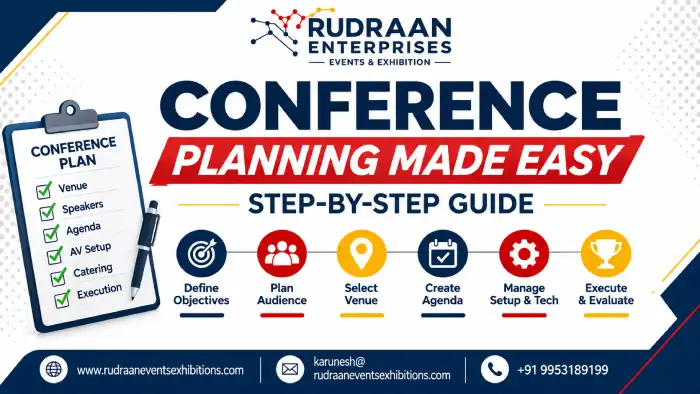
This step-by-step conference planning guide explains how to organise a successful conference, from defining your objectives to managing the event on the day.
1. Define Your Conference Objectives
Before making any arrangements, identify the main purpose of your conference. Having clear objectives helps you make better decisions about the venue, audience, speakers, programme, and budget.
Start by asking:
- Why are you organizing the conference?
- Who is your target audience?
- What information or experience should attendees gain?
- What outcomes do you expect from the event?
- Is the conference intended for networking, education, business development, or brand promotion?
For example, a corporate leadership conference may focus on business strategy and team development, while an industry conference may bring professionals together to discuss new technologies and market developments.
Clearly defined objectives will guide the entire planning process.
2. Identify Your Target Audience and Guest List
Understanding your audience is essential for creating a relevant and engaging conference experience.
Your target audience may include:
- Business owners and entrepreneurs
- Corporate executives and managers
- Industry professionals
- Employees and internal teams
- Investors and business partners
- Students and academic professionals
- Customers and potential clients
Estimate the expected number of attendees before selecting a venue. This will help you determine seating arrangements, catering requirements, registration facilities, and technical resources.
You should also decide whether the conference will be invitation-only, open for registration, or accessible to selected industry participants.
3. Prepare a Realistic Conference Budget
Budget planning is one of the most important stages of conference organisation. A clear budget helps control expenses and ensures that essential arrangements receive sufficient attention.
Common conference expenses include:
- Venue rental and booking charges
- Stage design and event production
- Audio-visual equipment and lighting
- Speaker fees and travel arrangements
- Catering and refreshments
- Branding, signage, and printed materials
- Registration and event management systems
- Photography and videography
- Guest accommodation and transportation
- Contingency expenses
Always keep a contingency amount for unexpected costs. This can help you manage last-minute requirements without affecting the quality of the event.
Compare vendor quotations, confirm what each package includes, and maintain a record of approved expenses.
4. Choose the Right Conference Venue
The venue plays a major role in the comfort, accessibility, and overall experience of conference attendees.
Consider the following factors when selecting a conference venue:
Location and accessibility: Choose a location that is convenient for your attendees, with suitable transport and parking facilities.
Capacity: Make sure the venue can comfortably accommodate your expected audience.
Seating arrangements: Consider theatre-style, classroom-style, boardroom, or round-table seating depending on the conference format.
Facilities: Check the availability of Wi-Fi, power supply, restrooms, registration areas, and catering facilities.
Technical support: Confirm whether the venue provides microphones, projectors, LED screens, sound systems, and technical assistance.
Flexibility: Check whether the venue allows customised stage setups, branding, exhibition spaces, and additional installations.
For a wider understanding of professional event arrangements, explore Rudraan’s event management services.
5. Finalise Speakers, Panellists, and Special Guests
Speakers are often one of the biggest attractions of a conference. Their expertise, communication skills, and relevance to the subject can significantly influence attendee engagement.
When selecting speakers, consider:
- Their professional background and experience
- Knowledge of the conference subject
- Previous speaking experience
- Relevance to your target audience
- Availability and travel requirements
Contact speakers well in advance and confirm their participation, session duration, presentation requirements, and technical needs.
For panel discussions, select participants who can bring different perspectives to the conversation. Share the discussion topics and expected format beforehand so that everyone is prepared.
6. Create a Detailed Conference Agenda
A well-structured agenda keeps the conference organized and ensures that attendees know what to expect.
Your agenda may include:
- Guest registration and welcome
- Opening remarks
- Keynote presentations
- Technical or educational sessions
- Panel discussions
- Networking breaks
- Lunch or refreshments
- Question-and-answer sessions
- Closing remarks and acknowledgements
Avoid scheduling too many sessions without breaks. Attendees need time to refresh, network, and move between different activities.
Share the final agenda with registered participants before the conference through email or an event information page.
7. Plan Stage Design, Branding, and Event Setup
The stage is one of the most visible areas of a conference. Its design should reflect the organisation’s identity and create a professional environment for speakers and attendees.
Important stage and branding elements include:
- Branded stage backdrop
- LED display screens
- Podiums and speaker tables
- Professional stage lighting
- Directional signage
- Registration desk branding
- Sponsor and partner displays
- Conference banners and standees
For larger conferences, consider incorporating exhibition areas where sponsors, partners, or participating businesses can showcase their products and services.
Professional exhibition stall design and fabrication can also help create dedicated brand presentation spaces within the event venue.
8. Arrange Audio-Visual Equipment and Technical Support
Technical arrangements are essential for a smooth conference experience. Even a well-planned event can face difficulties if microphones, presentation screens, internet connectivity, or sound systems fail.
Depending on the conference format, you may require:
- Professional sound systems
- Wireless and lapel microphones
- LED screens or projectors
- Presentation laptops
- Stage and ambient lighting
- Video recording equipment
- Live streaming facilities
- Video conferencing systems
- Reliable internet connectivity
- Backup power and technical equipment
Conduct a complete technical rehearsal before the conference begins. Test presentations, microphones, videos, lighting, and internet connectivity.
Keep backup equipment available for critical technical requirements.
9. Manage Registration and Guest Experience
The registration process creates the first impression for conference attendees. A smooth check-in experience helps guests feel welcomed and reduces unnecessary waiting.
Your registration arrangements may include:
- Online registration forms
- Confirmation emails
- QR-code or digital check-in
- Printed guest lists
- Name badges and delegate kits
- Registration counters
- Dedicated guest assistance
For larger conferences, create separate registration counters for speakers, VIP guests, delegates, and general attendees where required.
Ensure that staff members are available to guide guests towards seating areas, session rooms, networking spaces, and refreshments.
10. Plan Catering and Refreshments
Food and refreshments contribute to attendee comfort, especially during full-day conferences.
Depending on the event schedule and audience size, catering may include:
- Welcome beverages
- Tea and coffee breaks
- Breakfast arrangements
- Lunch service
- Evening refreshments
- Special dietary options
Consider the timing of catering services to avoid interruptions during important presentations.
Confirm the menu, serving arrangements, dietary requirements, and final guest count with the catering team before the event.
11. Promote Your Conference Effectively
Conference promotion helps attract the right audience and improve registrations.
Choose marketing channels based on your target audience and conference objectives.
Website and landing page: Publish conference details, speakers, agenda, registration information, and contact details.
Email marketing: Send invitations, registration confirmations, reminders, and event updates.
Social media: Share speaker announcements, event highlights, promotional creatives, and registration reminders.
LinkedIn: Use professional updates and relevant industry communities to reach business audiences.
Partner promotion: Encourage sponsors, speakers, and participating organisations to share conference information with their networks.
Start promotion early enough to give potential attendees time to register and make arrangements.
12. Coordinate Vendors and Event Staff
A conference usually involves multiple teams working together. These may include venue management, catering, technical production, security, registration, photography, and event coordination.
Create a clear responsibility list so every team understands its role.
Important coordination tasks include:
- Confirming vendor bookings
- Sharing event schedules
- Finalising setup and dismantling timings
- Assigning staff responsibilities
- Coordinating speaker arrivals
- Managing guest movement
- Supervising technical rehearsals
- Handling last-minute requirements
A dedicated event coordinator can help maintain communication between teams and ensure that the event follows the planned schedule.
13. Prepare a Conference-Day Execution Plan
A conference-day execution plan helps everyone understand what needs to happen and when.
Prepare a detailed schedule covering venue access, setup, technical checks, registration, speaker arrivals, session timings, catering, and closing activities.
Assign a responsible person to each major activity.
Before guests arrive, check:
- Stage and seating arrangements
- Registration counters
- Sound and lighting systems
- Presentation screens
- Speaker presentation files
- Signage and branding
- Catering readiness
- Emergency contact details
- Backup equipment
Keep communication channels open between the event management team and vendors throughout the conference.
14. Evaluate the Conference After Completion
Conference planning does not end when the last guest leaves. Post-event evaluation helps identify what worked well and what can be improved for future events.
Collect feedback from attendees, speakers, sponsors, and internal teams.
Evaluate important areas such as:
- Total registrations and attendance
- Session participation
- Speaker performance
- Guest satisfaction
- Technical performance
- Budget management
- Marketing performance
- Networking opportunities
- Overall event execution
Share relevant photographs, recordings, presentations, and follow-up communication with attendees where appropriate.
You can also publish a post-event summary highlighting key discussions and important outcomes.
15. Common Conference Planning Mistakes to Avoid
Even experienced organisers can face challenges when important details are overlooked.
Avoid these common mistakes:
Starting planning too late: Late bookings can limit venue and vendor choices.
Ignoring technical rehearsals: Unchecked equipment can create problems during presentations.
Creating an overloaded agenda: Too many sessions can reduce attendee engagement.
Underestimating the budget: Unexpected expenses can affect event quality.
Poor communication: Vendors, speakers, and staff must receive clear instructions.
Ignoring attendee comfort: Seating, refreshments, accessibility, and navigation should be planned carefully.
Not having a backup plan: Prepare alternatives for technical issues, schedule changes, and other unexpected situations.
16. Why Hire a Professional Conference Event Management Company?
Organising a conference requires coordination across several areas, from venue selection and stage production to speaker management and technical execution.
Working with a professional event management company can help businesses manage these responsibilities more efficiently.
A professional team can assist with:
- Conference planning and coordination
- Venue selection and event setup
- Stage design and fabrication
- Audio-visual and lighting arrangements
- Branding and promotional displays
- Vendor coordination
- Guest management
- On-site event execution
At Rudraan Events & Exhibitions, we support businesses with event planning, production, and execution requirements. Our approach focuses on understanding the event objectives and coordinating the arrangements needed to deliver a professional experience.
You can also explore our event management approach to understand how planning and execution work together.
17. Conference Planning Checklist
Use this checklist to keep your conference arrangements organized.
- Define conference objectives and expected outcomes.
- Identify the target audience and estimated attendance.
- Prepare and approve the event budget.
- Shortlist and confirm the venue.
- Finalise speakers, panellists, and special guests.
- Prepare the conference agenda.
- Plan stage design, branding, and seating.
- Arrange audio-visual equipment and technical support.
- Set up registration and guest management.
- Confirm catering and refreshments.
- Launch conference promotions.
- Coordinate vendors and event staff.
- Conduct a complete technical rehearsal.
- Prepare a conference-day execution schedule.
- Collect feedback and evaluate the event.
Frequently Asked Questions About Conference Planning
1. How early should you start planning a conference?
The planning timeline depends on the size and complexity of the conference. Larger events involving multiple speakers, sponsors, and technical requirements generally need several months of preparation.
2. What are the most important steps in conference planning?
The main steps include defining objectives, identifying the audience, preparing a budget, selecting a venue, booking speakers, creating an agenda, arranging technical equipment, and coordinating event execution.
3. How do you choose the right conference venue?
Consider the location, capacity, accessibility, seating arrangements, technical facilities, catering options, and available space for branding or exhibitions.
4. What equipment is required for a corporate conference?
Common requirements include microphones, sound systems, LED screens or projectors, presentation equipment, stage lighting, Wi-Fi, and backup technical equipment.
5. How much does it cost to organise a conference?
Conference costs vary according to the venue, guest count, event duration, production requirements, speakers, catering, and location. A detailed budget should be prepared based on the event’s specific requirements.
6. How can you make a conference more engaging?
Include relevant speakers, interactive discussions, question-and-answer sessions, networking opportunities, audience activities, and well-organized breaks.
7. Why is technical rehearsal important before a conference?
A technical rehearsal helps identify problems with sound, lighting, presentations, screens, internet connectivity, and other equipment before attendees arrive.
8. What is the difference between a conference and a seminar?
A conference generally involves multiple sessions, speakers, discussions, and networking opportunities around a broader subject. A seminar is usually more focused on a particular topic and may involve a smaller audience.
9. Can a conference include an exhibition area?
Yes. Conferences can include exhibition spaces where sponsors, business partners, and participating organisations display their products and services.
10. Should you hire a professional event management company for a conference?
Hiring a professional team can help coordinate venues, vendors, technical production, branding, guest management, and on-site execution, particularly for large or complex conferences.
Conclusion
Successful conference planning depends on preparation, coordination, and attention to detail. From defining your objectives and selecting the right venue to managing speakers, technical arrangements, and guest experience, every stage plays an important role.
A structured planning process helps businesses avoid common mistakes, manage their budgets, and deliver a professional event.
Whether you are organizing a corporate conference, business summit, industry seminar, or networking event, Rudraan Events & Exhibitions can support your event planning and execution requirements.
Planning your next conference? Visit Rudraan Events & Exhibitions or contact our team to discuss your event requirements.