


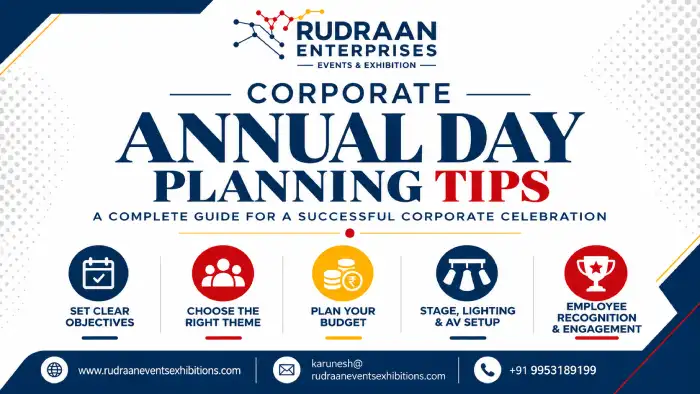
A corporate annual day is more than just an event on the company calendar. It is an opportunity to celebrate achievements, recognise employee contributions, strengthen workplace relationships, and bring the entire organisation together. From recognising outstanding performers to sharing business milestones, an annual day celebration creates a valuable experience for employees, management, clients, and other stakeholders.
However, organising a successful annual day requires careful planning, creative thinking, and professional execution. The venue, event theme, stage production, entertainment, catering, guest management, and event schedule must all work together to create a memorable celebration.
With the right corporate annual day planning strategy, businesses can organise an event that reflects their company culture while ensuring employees feel valued and engaged.
Whether you are planning a small office celebration, a large corporate gathering, or a grand annual function in Delhi NCR, this guide covers the essential steps to help you plan an organised and memorable event.
1. Set Clear Objectives for Your Corporate Annual Day
Before selecting a venue or finalising decorations, identify the purpose of your annual day celebration. Understanding the objectives will help you make better decisions about the event format, activities, budget, and overall experience.
Different organisations may have different reasons for hosting an annual day. Some companies focus on employee recognition, while others use the occasion to celebrate business achievements, introduce future goals, or strengthen relationships between departments.
Common Objectives of a Corporate Annual Day
- Celebrate achievements: Highlight the company’s milestones, growth, and important accomplishments.
- Recognise employees: Appreciate employees who have contributed to organisational success.
- Strengthen team relationships: Encourage interaction between employees and departments.
- Communicate future goals: Share the company’s vision, plans, and upcoming priorities.
- Improve employee engagement: Create an enjoyable environment where employees feel connected to the organisation.
- Build company culture: Reinforce the organisation’s values, identity, and working culture.
Once your objectives are clear, decide what you want employees and guests to remember about the event. This will provide direction for the creative concept and event planning process.
2. Choose the Right Corporate Annual Day Theme
A creative theme can give your annual day celebration a distinctive identity. It connects the stage design, decorations, employee activities, entertainment, dress code, and overall event atmosphere.
The theme should reflect your company’s culture and the type of experience you want to create. For example, a technology company may prefer a futuristic concept, while an organisation celebrating its achievements may choose a journey-based theme.
Popular Corporate Annual Day Theme Ideas
Glamour and Awards Night: Create a premium celebration with an elegant stage, formal dress code, award presentations, and professional entertainment.
Retro Theme: Introduce a nostalgic atmosphere with retro music, themed decorations, costumes, and interactive activities.
Bollywood Night: Add energy to the celebration through Bollywood-inspired performances, music, dance, and themed photo areas.
Future and Innovation: Suitable for technology-driven organisations, this theme can include modern stage designs, LED screens, digital visuals, and interactive experiences.
Around the World: Create an international atmosphere using different cultural concepts, themed food stations, and creative decorative elements.
Company Journey and Achievements: Celebrate the organisation’s history, milestones, employees, and achievements through visual storytelling and award presentations.
How to Select the Best Theme
Consider your company’s brand identity, employee demographics, event objectives, venue, and available budget. The theme should be enjoyable without making the event difficult to organise.
It is also important to maintain consistency. Stage backdrops, entrance decorations, presentation slides, invitations, and event signage should follow the same creative direction.
3. Prepare a Realistic Corporate Annual Day Budget
Budget planning is one of the most important parts of organising a corporate annual day. Without a clear financial plan, expenses can increase due to last-minute requirements, additional equipment, or changes in the event schedule.
Start by identifying the total amount available for the celebration. Then divide the budget into different categories according to the event’s priorities.
Major Corporate Annual Day Budget Components
| Budget Category | Requirements | Venue | Hall rental, banquet, hotel, or outdoor location | Stage Production | Stage setup, backdrop, LED screens, and structures | Lighting and Sound | Audio equipment, microphones, stage lighting, and technical support | Decoration | Entrance, stage, tables, and themed installations | Entertainment | Anchors, DJs, performers, and artists | Catering | Food, beverages, and refreshments | Photography and Videography | Event coverage, photographs, and highlight videos | Awards and Gifts | Trophies, certificates, and employee gifts | Logistics | Transportation, equipment movement, and installation | Contingency | Additional or unexpected expenses |
|---|
Tips for Managing Your Event Budget
- Prioritise essential event requirements before optional activities.
- Request detailed quotations from vendors.
- Compare the quality and scope of different service providers.
- Confirm what is included in venue and production packages.
- Keep a contingency allocation for unexpected expenses.
- Finalise major requirements early to reduce last-minute changes.
A detailed budget helps management understand where resources are being allocated and makes it easier to evaluate different event proposals.
4. Select the Right Venue for Your Annual Day
The venue has a major influence on the overall event experience. It determines the available space, seating arrangements, stage possibilities, catering facilities, and technical requirements.
Choosing a venue based only on appearance or location can create practical problems later. The venue must be suitable for your guest count, event format, entertainment requirements, and budget.
Factors to Consider When Selecting a Venue
Guest Capacity: Choose a venue that comfortably accommodates employees, management, special guests, and performers.
Location and Accessibility: Consider travel distance, parking availability, public transport, and convenience for attendees.
Stage and Production Facilities: Check whether the venue can accommodate the required stage dimensions, LED screens, lighting, and sound equipment.
Catering Facilities: Confirm menu options, food service arrangements, dining capacity, and dietary requirements.
Technical Infrastructure: Review power availability, equipment restrictions, internet connectivity, and audio-visual facilities.
Venue Permissions: Confirm installation rules, decoration restrictions, event timings, and other operational requirements.
For companies planning events in Delhi NCR, venue options may include luxury hotels, banquet halls, convention centres, corporate auditoriums, and outdoor event spaces.
Always inspect the venue or review accurate floor plans before finalising the event layout.
5. Plan an Engaging Corporate Annual Day Schedule
An organised event schedule ensures that every activity takes place at the right time. It also helps employees and guests understand what to expect throughout the celebration.
A good annual day programme should balance formal presentations with entertainment and interactive activities. Long speeches and unnecessary delays can reduce audience engagement, so it is important to maintain a comfortable pace.
Sample Corporate Annual Day Event Schedule
| Time | Event Activity | 5:00 PM | Guest Arrival and Registration | 5:30 PM | Welcome and Opening Performance | 5:45 PM | Welcome Address by Management | 6:00 PM | Company Achievements and Annual Presentation | 6:30 PM | Employee Recognition and Awards | 7:15 PM | Cultural Performances | 8:00 PM | Interactive Games and Entertainment | 8:30 PM | Special Performance or DJ | 9:00 PM | Dinner and Networking | 10:00 PM | Closing and Thank You Address |
|---|
This is an illustrative schedule. Actual timings should be adjusted according to the event format, guest count, and venue arrangements.
Tips for Creating a Smooth Event Flow
- Keep opening speeches focused and engaging.
- Allow enough time for award presentations.
- Coordinate performers and technical teams in advance.
- Schedule breaks where necessary.
- Avoid overlapping activities.
- Assign a dedicated event coordinator to monitor the schedule.
A detailed run sheet should be shared with the management team, anchor, production crew, performers, and other key vendors before the event.
6. Include Entertainment and Employee Engagement Activities
Entertainment is often one of the most anticipated parts of a corporate annual day. It gives employees an opportunity to relax, participate, and enjoy the celebration outside their regular work environment.
The entertainment programme should match the audience, company culture, and event theme.
Corporate Annual Day Entertainment Ideas
Live Music Performances: Invite professional singers or bands to create an energetic atmosphere.
Dance Performances: Include professional dance acts or employee dance performances.
Stand-Up Comedy: A suitable comedian can add humour and make the event more entertaining.
DJ and Dance Floor: A dedicated dance segment can bring employees together towards the end of the celebration.
Employee Talent Shows: Encourage employees to showcase singing, dancing, acting, or other creative skills.
Interactive Games: Organise quizzes, team challenges, and audience participation activities.
Photo Booth Experiences: Create a themed photo area where employees can capture memories.
Magic and Special Acts: Professional performers can add an unexpected entertainment element to the programme.
Why Employee Participation Matters
An annual day becomes more meaningful when employees are not just spectators but active participants. Encourage departments to contribute performances, nominate colleagues for awards, or participate in selected activities.
However, participation should remain voluntary and comfortable for everyone.
7. Focus on Stage Design, Lighting and Audio-Visual Production
The stage is one of the most important visual elements of a corporate annual day. It becomes the centre of attention during speeches, award ceremonies, entertainment performances, and important announcements.
A professionally designed stage should reflect the company theme while providing suitable visibility and technical support.
Important Stage and Production Elements
Stage Design: Develop a layout that accommodates speakers, performers, award presentations, and other programme activities.
LED Screens: Use LED displays for company presentations, event branding, videos, live visuals, and important announcements.
Stage Backdrop: Create a backdrop that reflects the company’s identity and annual day theme.
Professional Lighting: Use appropriate lighting for speeches, performances, award presentations, and photography.
Sound Systems: Ensure microphones, speakers, mixers, and audio equipment are suitable for the venue and audience size.
Presentation Support: Prepare slides, videos, animations, and other visual content before the event.
Technical Rehearsals: Test all equipment and presentation materials before guests arrive.
Why Technical Coordination Is Important
Even an attractive stage design can lose its impact if the sound is unclear, screens stop working, or lighting is poorly coordinated.
A dedicated technical team should manage equipment setup, sound checks, lighting cues, presentations, and performance transitions.
8. Arrange Catering and Guest Hospitality
Food and hospitality are important parts of the annual day experience. Guests should feel comfortable throughout the celebration, whether they are attending a formal dinner, buffet, networking session, or entertainment programme.
The catering arrangement should match the event format, guest count, venue facilities, and budget.
Catering and Hospitality Planning Tips
- Finalise the menu according to the audience and event duration.
- Include suitable vegetarian and non-vegetarian options where required.
- Consider dietary preferences and allergies.
- Confirm the number of food counters and serving arrangements.
- Arrange sufficient seating and dining space.
- Ensure drinking water and refreshments are accessible.
- Coordinate catering timings with the event schedule.
- Plan a clear guest registration and welcome process.
For larger corporate gatherings, designated hospitality staff can help guide guests, manage seating, and respond to queries.
9. Recognise Employee Achievements and Contributions
Employee recognition is one of the most meaningful elements of a corporate annual day. It provides an opportunity to appreciate individuals and teams who have contributed to the organisation’s progress.
A well-organised awards segment can make employees feel valued while encouraging a positive workplace culture.
Corporate Annual Day Award Ideas
- Employee of the Year
- Best Team Performance
- Outstanding Leadership Award
- Innovation and Creativity Award
- Rising Star Award
- Customer Excellence Award
- Long Service Recognition
- Special Achievement Award
- Department Excellence Award
How to Organise an Effective Awards Ceremony
Finalise award categories and eligibility criteria before the event. Coordinate with HR and management to confirm the recipients, award descriptions, certificates, and trophies.
Prepare the presentation slides and announcements in advance. Arrange the stage, photography, and award handover process so that each recipient receives proper recognition.
Avoid unnecessary delays by confirming the sequence and coordinating with the anchor and stage team.
10. Promote the Annual Day Event Internally
Internal communication helps build excitement before the celebration. Employees should receive event information early enough to plan their attendance and understand the programme.
A well-planned communication strategy also ensures that important details reach everyone.
Internal Promotion Ideas
Save-the-Date Announcements: Share the event date in advance through email and internal communication channels.
Digital Invitations: Create branded invitations with the event theme, venue, timings, and registration details.
Countdown Messages: Share reminders as the event approaches.
Theme Reveals: Introduce the annual day theme through creative posters or short videos.
Employee Participation Announcements: Invite employees to register for performances, games, or other activities.
Event Updates: Share relevant information about dress codes, transportation, schedules, and guest arrangements.
After the event, share selected photographs, videos, and highlights to extend the celebration beyond the event day.
11. Create a Corporate Annual Day Planning Checklist
A checklist helps the organising team track important responsibilities and avoid missing essential requirements.
Before the Event
-
Define the event objectives.
-
Finalise the event date and format.
-
Confirm the expected guest count.
-
Establish the event budget.
-
Select the annual day theme.
-
Shortlist and confirm the venue.
-
Finalise the stage and decor concept.
-
Book entertainment performers and the anchor.
-
Confirm catering and hospitality requirements.
-
Finalise the award categories and recipients.
-
Prepare invitations and internal announcements.
-
Confirm vendors and production requirements.
During the Event
-
Manage guest registration and welcome arrangements.
-
Monitor the event schedule.
-
Coordinate stage activities and performances.
-
Check sound, lighting, and LED screens.
-
Manage award presentations.
-
Coordinate catering and hospitality.
-
Monitor guest movement and venue safety.
-
Ensure photography and videography coverage.
After the Event
-
Coordinate equipment dismantling.
-
Complete venue handover.
-
Collect event photographs and videos.
-
Share highlights with employees.
-
Review vendor performance.
-
Compare final expenses against the budget.
-
Collect feedback from attendees.
-
Document learnings for future events.
12. Common Corporate Annual Day Planning Mistakes to Avoid
Even well-intentioned event plans can face problems when important details are overlooked. Identifying common mistakes early can help businesses reduce unnecessary stress and improve event execution.
1. Starting Planning Too Late
Late planning can limit venue availability, entertainment options, and production flexibility. Start preparations early, especially for large gatherings and peak event dates.
2. Ignoring the Audience
A programme designed without considering employees’ interests may struggle to maintain engagement. Understand your audience and choose suitable entertainment and activities.
3. Overloading the Event Schedule
Too many speeches, performances, and activities can make the event feel unnecessarily long. Prioritise the most important programme elements.
4. Underestimating Technical Requirements
Inadequate sound, lighting, or presentation arrangements can disrupt the event. Conduct technical checks and rehearsals before the celebration.
5. Not Keeping a Contingency Plan
Unexpected delays, weather changes, equipment issues, or vendor problems can affect the programme. Prepare alternative arrangements for important event components.
6. Poor Vendor Coordination
When different vendors work independently without a shared schedule, installation delays and communication problems can occur. Assign responsibilities and establish clear coordination channels.
7. Ignoring Guest Movement and Safety
Stage placement, seating, dining counters, entrances, and exits should be planned carefully. Maintain clear access routes and comply with venue safety requirements.
13. Why Hire a Professional Corporate Event Management Company?
Organising a corporate annual day involves several interconnected activities. Managing the venue, creative concept, production, entertainment, catering, guest experience, and technical requirements internally can place additional pressure on employees and management.
A professional corporate event management company can help coordinate these requirements through a structured planning and execution process.
Benefits of Hiring Professional Event Organisers
Creative Event Concepts: Professional planners can develop themes and event concepts that reflect the company’s identity.
End-to-End Coordination: A coordinated team can manage multiple event requirements and vendor responsibilities.
Stage and Production Management: Professional production planning helps organise stage design, lighting, sound, and visual displays.
Entertainment Management: Performers, anchors, DJs, and activities can be coordinated according to the programme.
Budget Planning: A structured proposal helps businesses understand the scope of work and allocate resources.
Event-Day Supervision: On-site coordination helps monitor the schedule, manage transitions, and address operational issues.
Better Guest Experience: Proper planning of registration, seating, hospitality, and entertainment contributes to a smoother celebration.
For businesses organising annual day events in Delhi NCR, working with an experienced local event management team can help simplify venue coordination, production planning, and event logistics.
14. Corporate Annual Day Planning for Businesses in Delhi NCR
Delhi NCR offers a variety of options for corporate annual day celebrations, including luxury hotels, banquet halls, convention centres, auditoriums, and outdoor venues.
However, planning a successful event in the region requires attention to local logistics, venue availability, transportation, installation schedules, and vendor coordination.
Businesses should consider the following when planning their annual day:
- Choose a venue that is accessible for employees travelling from different parts of Delhi NCR.
- Confirm parking and transportation arrangements.
- Check venue restrictions for sound, lighting, decoration, and production.
- Consider seasonal weather conditions when selecting outdoor locations.
- Confirm installation and dismantling timings with the venue.
- Coordinate suppliers and technical teams according to the event schedule.
- Arrange a suitable indoor backup for outdoor events where necessary.
A clear planning process helps companies organise celebrations that are professionally managed and aligned with their business requirements.
15. Organise a Memorable Corporate Annual Day with Rudraan Events & Exhibitions
A successful corporate annual day brings people together, celebrates achievements, and creates positive memories for everyone involved. From selecting the right theme and venue to managing entertainment, stage production, and guest experience, every detail contributes to the overall success of the celebration.
Rudraan Events & Exhibitions provides event management and production solutions for corporate gatherings and special occasions. With a coordinated approach to event planning, creative concepts, production requirements, and execution, businesses can work towards delivering a celebration that reflects their organisation’s identity and objectives.
Whether you are planning an employee appreciation evening, a grand annual celebration, an awards ceremony, or a large corporate gathering in Delhi NCR, the right planning approach can make the entire process more organised.
Planning your company’s annual day celebration?
Connect with Rudraan Events & Exhibitions to discuss your corporate event requirements.
Call: +91 9953189199
Email: karunesh@rudraaneventsexhibitions.com
Website: https://rudraaneventsexhibitions.com/
Frequently Asked Questions About Corporate Annual Day Planning
1. What is a corporate annual day event?
A corporate annual day is an organised company celebration that brings employees, management, and invited guests together to recognise achievements, share milestones, conduct award ceremonies, and enjoy entertainment activities.
2. How do you plan a successful corporate annual day?
Start by defining the event objectives, setting a budget, selecting a theme and venue, arranging entertainment, planning the programme, coordinating production, and managing guest hospitality. A detailed checklist helps track responsibilities.
3. What are some creative corporate annual day themes?
Popular ideas include Bollywood Night, Retro Theme, Glamour and Awards Night, Future and Innovation, Around the World, and Company Journey and Achievements. The theme should reflect the organisation’s culture and audience.
4. How much does a corporate annual day event cost?
The cost depends on guest count, venue, event duration, stage production, entertainment, catering, decor, and technical requirements. Businesses should request a detailed quotation based on their specific event needs.
5. What activities can be included in a corporate annual day?
Activities may include employee awards, live music, dance performances, comedy shows, team games, employee talent shows, DJ sessions, photo booths, and interactive audience activities.
6. How early should a company start planning its annual day?
Planning several months in advance is generally helpful for larger corporate events. It provides more time to confirm the venue, vendors, performers, production requirements, and event schedule. Smaller events may require less preparation time.
7. Why should companies hire a professional event management company?
A professional team can coordinate venue selection, creative planning, production, entertainment, vendors, hospitality, and event-day execution. This helps reduce the internal coordination burden and creates a more structured planning process.
8. What should be included in a corporate annual day checklist?
The checklist should include objectives, budget, venue, theme, guest list, stage design, entertainment, catering, invitations, technical arrangements, employee awards, event schedule, safety, and post-event activities.
9. What makes a corporate annual day memorable?
A clear theme, engaging programme, meaningful employee recognition, quality entertainment, professional production, and comfortable guest arrangements all contribute to a memorable corporate annual day.
10. Can an event management company organise annual day celebrations in Delhi NCR?
Yes. Event management companies can help businesses coordinate annual day celebrations across Delhi NCR, depending on their service coverage, event requirements, venue availability, and production capabilities.
Conclusion
Corporate annual day celebrations are an opportunity for organisations to appreciate their people, celebrate achievements, and strengthen workplace connections. A successful event requires more than an attractive venue or entertaining programme. It depends on careful budgeting, creative planning, professional coordination, and attention to the guest experience.
By following these corporate annual day planning tips, businesses can organise celebrations that are engaging, well-structured, and aligned with their company culture.
Start planning early, define your priorities, and bring every event element together with a clear execution strategy.
Make your next corporate annual day a celebration worth remembering with Rudraan Events & Exhibitions.